
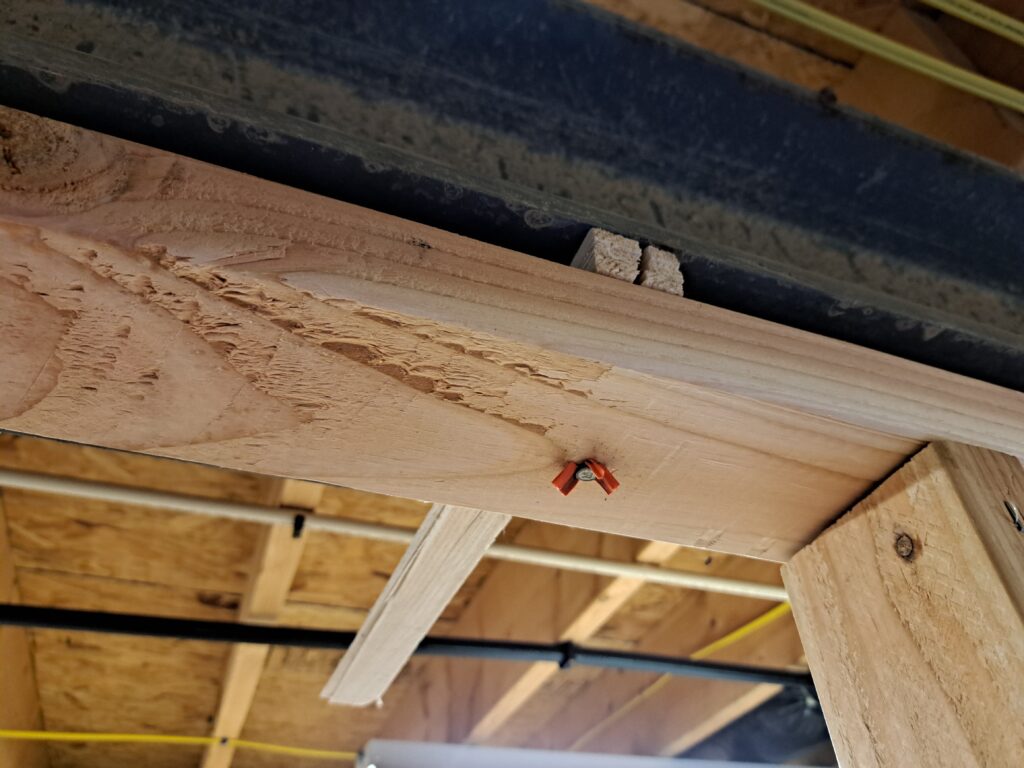
Introduction to Basement Framing
Framing is a crucial component in the construction and finishing of basements, serving as the structural foundation for walls, partitions, and other elements of the space. When starting on a DIY basement project, understanding the proper methods for basement wall framing becomes essential. Proper framing ensures that the walls not only support its weight, but things like mounted TV’s while also withstanding environmental factors such as moisture and temperature fluctuations commonly found in basements. For a complete overview on basement framing, please view our article here. But if you specifically need to learn how to anchor your walls to concrete and/or steel beams, keep reading!
Overview of the Different Approaches to Anchoring to Concrete
There are several common types of basement foundations found in homes and many types of structural support beams, especially varying by the age of the home. However, most foundations can be summed up simply by saying they’re just different ways of pouring or laying concrete. Similarly, the support beams are either large, long pieces of wood (or wood sealed together to create one large piece), or long steel beams. If you’re working with wood beams, you can simply nail your walls to them. But when working with concrete foundations and steel beams, you typically won’t just be using a hammer and nails. Here in lies the need for attaching your framed wall to concrete. Or more specifically, attaching the bottom plate (the 2×4 that makes up the bottom of your wall) to the concrete floor. There are two common practices for attaching these bottom plates, including using specialized screws and a hammer drill or a powder actuated nail gun. For the purposes of this article, we’ll start with our favorite way for attaching walls to concrete and steel beams (works for both).
Method 1: Using a Ramset Nail Gun for Concrete and Steel Anchoring
One effective method for securing walls to concrete floors and steel beams is through the use of a Ramset powder actuated nail gun. This powerful tool fires fasteners directly into concrete surfaces using a .22 caliber powder charge (yes, similar to the rifle). This ensures a strong bond without the need for drilling, making it an excellent choice for DIY basement projects.
When using a Ramset to attach to concrete or steel, the first step is to buy the right materials. Ramset recommends different levels of power and different length nails for each use of the gun. It sounds complex, but they’ve got a PDF that makes it pretty simple that can be found here. Typically, for attaching a 2×4 bottom plate to the concrete, we see people use a 2 1/2″ fastener (nail) with the yellow #4 powder charge from Ramset. You may see off brands of the nails and the charges, we do not recommend cheaping out on these as we can’t guarantee the quality for these off brands. Additionally, for nailing 2x4s into steel beams, we typically see the use of 2″ fasteners with washers and the yellow #4 powder charge.
Now that you have everything you need, let’s anchor your walls.
Before commencing with the use of a Ramset, safety precautions should be taken. Always wear safety goggles (I know they always say this, but in this case, it’s true) and hearing protection, as the process can generate debris and produce loud noises. Additionally, double check here that you are using the correct type of fastener for the particular surface you are anchoring into, whether it’s concrete or steel. Now familiarize yourself with the Ramset gun itself, reviewing the manufacturer’s guidelines to confirm proper usage.
Ensure all framing members are level and plumb (straight up and down) to achieve optimal performance and aesthetics in the finishing process. Next, decide where you want to fire your anchors. Typically, we start in the center between our first two studs and put and anchor every other gap between studs. Meaning, if you have a wall with 7 studs, you will have 3 anchors attaching the wall to the concrete, but you can do more if you really want to (it’s kind of fun).
To use the gun:
- First, put on your googles and ear plugs.
- Then load the Ramset with the appropriate fastener. Make sure you never put a nail in the gun if it already has a charge placed inside it!
- After you’ve loaded the nail into the gun, place the correct powder charge into the chamber, making sure to never point the gun at anything you aren’t okay with shooting.
- Now that the gun is loaded, slide the powder-charge-chamber closed.
- Now it’s time to shoot. Depress the Ramset against the wood where you want to place your anchor, push down firmly against the back of the Ramset (it will kick back a little when firing, you don’t want to lose your grip) when you’re ready, pull the trigger.
Good job! You’ve anchored your wall! Now repeat this for each location you’d like to attach an anchor.
Method 2: Tapcon Screws With a Hammer Drill
When choosing to anchor walls in your basement, using concrete screws for concrete and/or bolts for steel beams is a feasible alternative to using a Ramset. This method requires owning a hammer drill. You can sometimes get away with using your regular drill, but if you do this, you risk damaging the tool.
Getting started with the drill is actually pretty easy if you have the correct tools. It just requires a little more elbow grease than the Ramset. You’ll want to get some Tapcon screws—for attaching 2x4s to concrete. We recommend 2 3/4″ length at a standard 3/16″ width. As we’ve said, you’ll need a hammer drill. Finally, you need a specialized drill bit to drill into the concrete (making sure to match the length and width of your Tapcon screws) and a bit for the steel beams matching your bolt’s width. After gathering your tools, here’s the detailed steps for attaching your bottom/top plates.
Next, ensure all framing members are level and plumb (straight up and down) to achieve optimal performance and aesthetics in the finishing process. Next, decide where you want to drive your anchors. Typically, we start in the center between our first two studs and put and anchor every other gap between studs. Meaning, if you have a wall with 7 studs, you will have 3 anchors attaching the wall to the concrete or beam.
Drilling into Concrete
- First, set up your drill. You’ll need to attach your specialized concrete bit and set it to hammer mode. One optional step we like is to wrap a piece of painter’s tape around the bit to show you exactly how deep to drill your holes (stopping when you reach the blue tape). To do this, simply look at how long your screws are and mark your bit just beyond that length.
- Now you drill your holes, making sure to keep your drill level (straight up and down) as you drill.
- Switch your drill back to drilling mode and screw in your Tapcon screws.
Drilling into Steel Beams
- First, set up your drill. You’ll need to attach your specialized steel bit and turn off hammer mode (or use a standard drill).
- Now you drill your holes, making sure to keep your drill level (straight up and down) as you drill.
- Screw in your Tapcon screws.
Good job! You’ve anchored your wall! Now repeat this for each location you’d like to attach an anchor.
Which Method Should You Choose?
When embarking on a basement finishing project, particularly when framing walls, you really want to look at the size of the job when choosing which tools to purchase. Although in this case, if you don’t already have a hammer drill, we think there is a clear winner.
If you have a large basement with many new walls to anchor, then purchasing a Ramset will probably be your best bet. They are much faster than the drill method and actually very cost effective. However, if you only have a few walls to stand up, then drilling the holes won’t be a huge effort physically. However, our recommendation in both cases would still be the Ramset, the reason being the cost is very economical, and the tool is very easy to use.
One major caveat to our recommending you go with the Ramset is that this tool is powerful, and can be intimidating. If the idea of essentially shooting a gun into your concrete or steel scares you, then we highly recommend you just go with the drill and Tapcon screws as it’s less intimidating.
Conclusion and Final Tips
Securing walls in a basement is a vital aspect of the basement finishing process, particularly when undertaking a DIY basement project. Proper framing walls not only ensures stability but also enhances the overall safety and functionality of the space. Throughout this article, we have discussed various techniques for anchoring walls to concrete floors and securing them to steel beams.
By implementing these strategies, you will ensure that your basement is not only aesthetically appealing but also structurally sound, ultimately creating a space that adds value to your home. Best of luck with your basement framing project!
Tools Mention in this Guide
- Ramset powder actuated nail gun
- 2 1/2″ fasteners (nails)
- 2″ fasteners (nails) with washers
- Hammer drill
- Drill bit for concrete
- Tapcon screws
- Standard drill